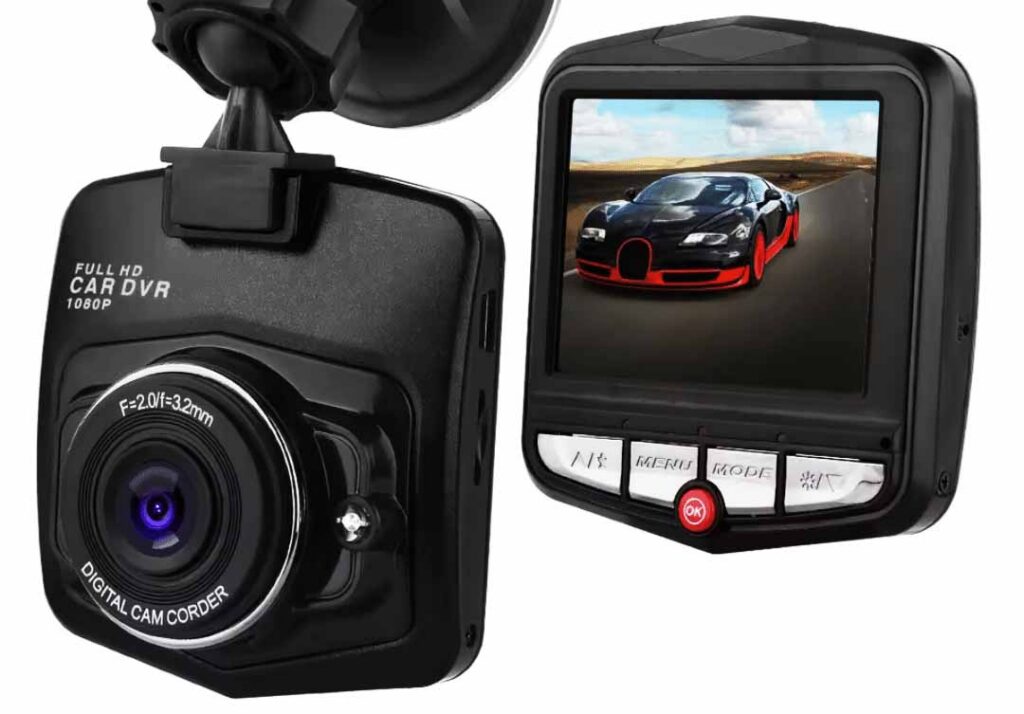
If you’ve seen an ad for the Vital Dash Cam, it probably came wrapped in a dramatic story. A driver gets hit, has no footage, pays hundreds more in insurance, and vows to never drive without a dash cam again. The pitch ends with a countdown timer, a 50% discount, and a warning that stock is running low.
Before you pull out your credit card, it’s worth slowing down. The Vital Dash Cam is sold almost entirely through advertorials and single-product landing pages, and the details across those pages don’t line up. This article breaks down what the company claims, where the story falls apart, and what real buyers have said publicly, so you can decide whether this camera deserves a spot on your windshield.
Let’s start with the claims. According to the manufacturer, the Vital Dash Cam is a windshield-mounted camera with a suction cup bracket that powers on automatically when you start your car. The marketing lists loop recording in 1, 2, or 3 minute intervals, a G-sensor that locks footage after a collision, a parking mode that wakes up on vibration, a small screen around 2 inches, and an included 64GB microSD card on some offers. Setup is pitched as a two-minute job: stick it to the glass, plug it into your car’s 12V outlet or USB port, and drive.
So far, that sounds like a standard budget dash cam. Loop recording, G-sensor file locking, and auto start are features you’ll find on nearly every camera in the $30 to $100 range, so nothing here is unusual.
The pricing follows a familiar pattern too. The official checkout lists a single unit at $59.99, marked down from a claimed $119.98, with multi-packs dropping the per-unit price to around $32 to $54. There’s a stated 30-day money-back guarantee on most pages, though one page mentions 60 days, which is the first of several inconsistencies. Add-ons like a $19 SD card, package protection, and an extended warranty get stacked on during checkout.
Here’s where things get messy, and why this camera keeps popping up in warning threads instead of recommendation lists.
The Red Flags Around the Vital Dash Cam
The biggest problem is that the product’s own marketing contradicts itself. One sales page says the camera records in 1080p Full HD. Another page for the same product claims 4K Ultra HD with a 16MP sensor. Those are very different cameras at very different price points, and a legitimate spec sheet doesn’t flip between them. One page also advertises a “350° wide angle,” which isn’t physically meaningful for a single lens, while another says 170°. When the numbers change depending on which ad you clicked, that’s a sign the copy was written to sell, not to inform.
Then there’s the advertorial itself. The article format looks like a personal blog post or news story, but the fine print at the bottom states plainly that it’s an advertisement, that the photos are models, and that the site owner gets paid for referrals. The insurance statistics and customer savings figures in it, like “830,000 customers saved $199,750,000,” have no verifiable source. At one point the sales copy even slips and refers to the product by a completely different brand name, which suggests recycled marketing text.
Public buyer feedback backs up the skepticism. In a long-running thread on r/dashcams, people who ordered the Vital Dash Cam describe receiving a generic camera that looks identical to unbranded units sold elsewhere for $12 to $17. Complaints include units arriving with no working power button, instructions that don’t match the actual device, phone connectivity that doesn’t exist, and a parking surveillance feature that support staff admitted only works with the car turned on. Several buyers also describe a frustrating refund process: partial refund offers of 50% to 85% to keep the camera, restocking fees, return shipping paid out of pocket, and in some cases refunds that never arrived. One person reported the charge on their card came from an unrelated company name.
None of this means every unit is defective. It means the gap between the marketing and the delivered product appears to be large, and the return process may not match the “no questions asked” guarantee in the ads. The dash cam concept itself is genuinely valuable. Footage of an accident really can protect you during an insurance claim, and a parking mode really can capture a hit-and-run. The question is whether this specific product delivers those features reliably. Based on the contradictory specs and the volume of public complaints, that’s a real gamble at $60.
If you want the actual benefits this ad is selling, established dash cam brands like Viofo, Vantrue, Garmin, and Nextbase sell cameras through Amazon and major retailers, starting around $40 to $80 for solid 1080p models and $100 to $200 for true 4K with reliable parking modes. Those come with real spec sheets, independent reviews, and standard retailer return policies.
Vital Dash Cam FAQ
The product exists and ships, so it’s not vaporware. But the marketing uses contradictory specs, fake-looking urgency timers, and an advertorial that admits in its own disclosure that it’s an ad. Multiple buyers describe receiving a cheap generic camera and struggling to get refunds. Treat it as a high-risk purchase at best.
Almost certainly not. One sales page claims 4K, another claims 1080p, and buyers who received the device describe budget hardware consistent with entry-level 1080p cameras or lower. A genuine 4K dash cam with a quality sensor typically costs $130 or more from an established brand.
According to a buyer who called the company directly, support confirmed the camera does not record 24/7 while parked with the engine off. Real parking mode usually requires a hardwire kit or an external battery pack, neither of which is included here.
The company advertises a 30-day guarantee. In practice, buyers describe being offered partial refunds to keep the camera, being charged 15% to 30% restocking fees, and paying their own return shipping. If you do order, use a credit card so you have dispute options.
For a tight budget, look at a Viofo or Vantrue 1080p model in the $40 to $80 range from a major retailer. You get verified specs, real independent reviews, and a return policy that doesn’t require phone negotiations. If you want front and rear coverage, plan on $100 to $250.
Yes, this part of the pitch is true. Clear footage showing the other driver at fault can settle a liability dispute quickly and keep a not-at-fault accident from raising your rates. That’s exactly why it’s worth buying a camera that reliably records, saves, and plays back footage when you need it most.
The bottom line: the problem the Vital Dash Cam claims to solve is real. The product behind the ad is the weak link. Spend your $60 on a camera with a consistent spec sheet and a track record, and you’ll get the protection the advertorial promises without the checkout circus.
Hi, this is a comment.
To get started with moderating, editing, and deleting comments, please visit the Comments screen in the dashboard.
Commenter avatars come from Gravatar.